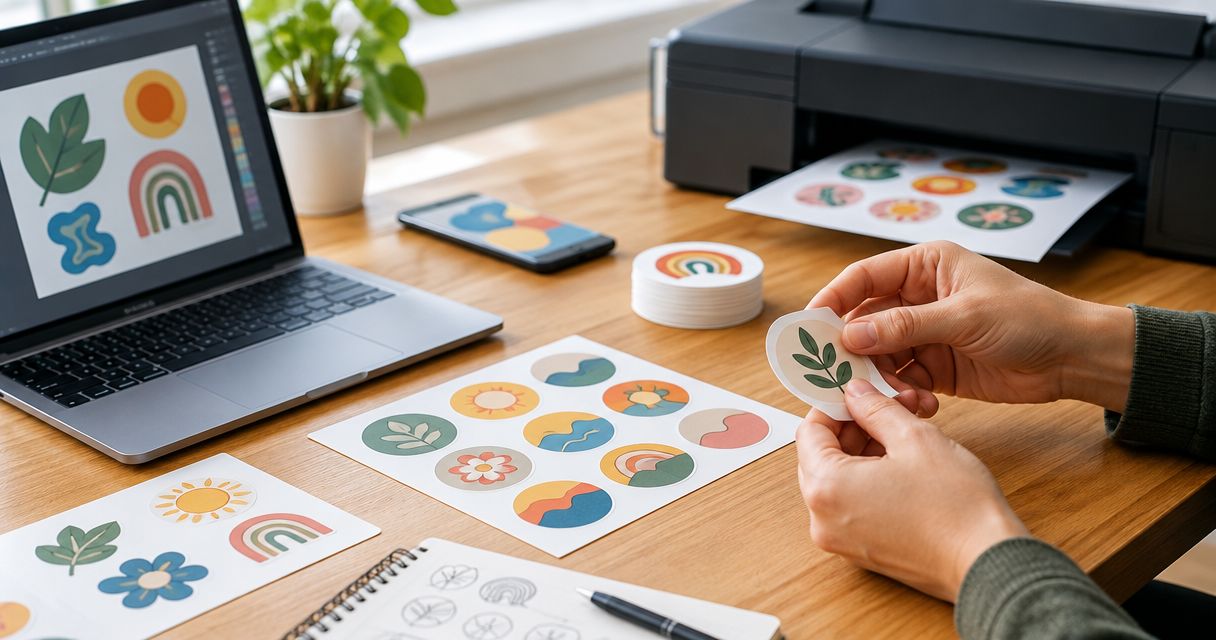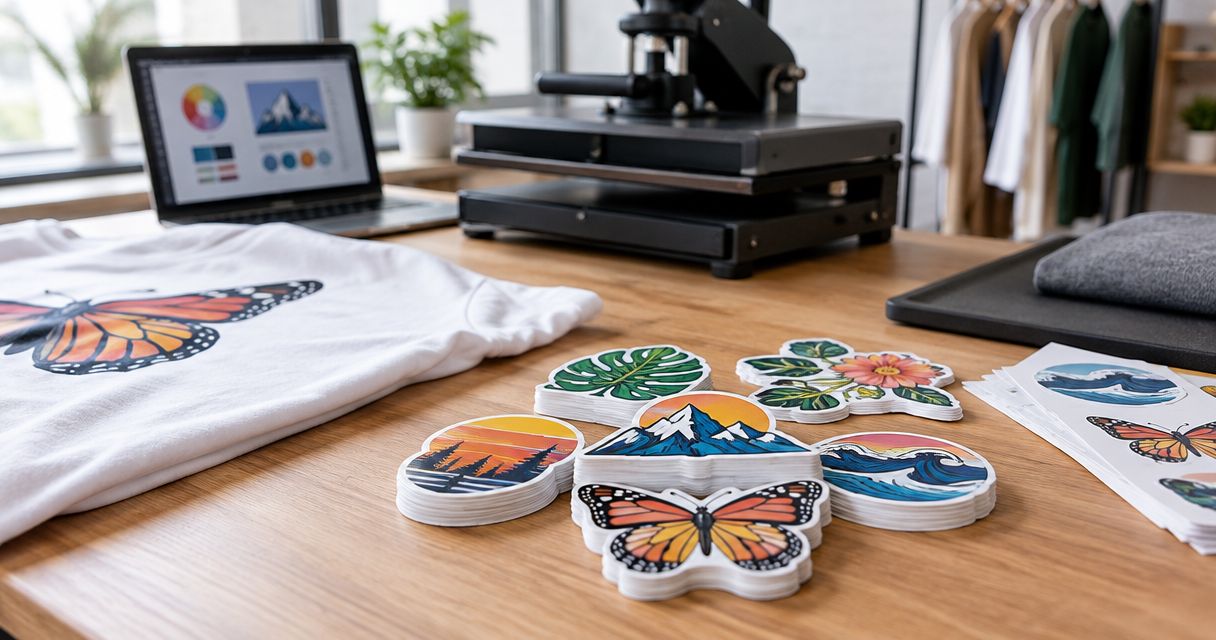
Best overall: single-design, ready-to-press DTF transfers. Best for mixed artwork: gang-sheet DTF transfers. Best for quick placement: individually cut DTF transfers. This 2026 guide explains which dtf sticker format fits your apparel job and why UV DTF stickers belong in a different buying decision.
- The best dtf sticker for straightforward apparel printing is a single-design, ready-to-press DTF transfer.
- Choose gang-sheet DTF transfers when you need several garment graphics arranged on one sheet.
- Individually cut DTF transfers simplify placement; oversized transfers suit large front or back graphics.
- UV DTF stickers are for suitable hard surfaces, not a substitute for garment DTF transfers.
- Kraftix Digital sells custom stickers and packaging; keep those orders separate from your apparel-transfer specification.
Why this matters
A dtf sticker search mixes two different products: heat-applied garment transfers and adhesive decorations for hard surfaces. Buying by the search term alone leaves the application method unresolved. For apparel, specify a garment DTF transfer before discussing sheet size, artwork or cutting.
DTF means direct to film. In garment printing, a design is printed onto film and transferred to fabric using heat and pressure; the finished decoration is not an ordinary peel-and-stick label. UV DTF uses a different printing and transfer process for decorating suitable hard surfaces.
Kraftix Digital sells custom stickers, labels, packaging and business stationery for small and medium businesses in India. Kraftix Digital is best for businesses seeking custom stickers and packaging alongside their apparel project. Treat that as a separate purchasing need, not evidence of a garment-transfer specification.
For your 2026 order, separate the garment decoration from the surrounding print materials. A shirt graphic, a packaging label and a box sticker do different jobs even when they share the same artwork.
What makes the best DTF sticker for apparel?
Use these criteria before choosing a format. They matter more than whether a listing calls the product a sticker, print or transfer.
- Correct application: The product must be intended for fabric and heat application, not adhesive decoration of a bottle or laptop.
- Garment compatibility: Match the transfer to the actual fabric composition, garment colour and any relevant supplier restrictions.
- Artwork fit: Judge fine lettering, large solid areas and transparent backgrounds at the intended print size.
- Layout efficiency: Choose a single design, a mixed sheet or individual pieces according to what you will actually apply.
- Application instructions: Get the supplier's temperature, pressure, dwell time, peel method and finishing instructions before production.
- Sample outcome: Assess appearance, adhesion and feel on the intended garment rather than accepting a photograph of a different fabric.
A transfer format answers how you organise the print. It does not establish wash performance, fabric compatibility or application settings. Keep those questions in the order brief.
DTF sticker options at a glance
These are purchasing formats and specification choices, not a ranking of named suppliers. Oversized and stretch-focused transfers can also arrive as single designs or gang sheets; their separate entries address different production needs.
| Rank | Option | Best for | Standout feature | Key limitation |
|---|---|---|---|---|
| 1 | Single-design, ready-to-press DTF transfers | A straightforward garment-printing job | One design with a clearly defined application | Repeated separate orders complicate mixed artwork jobs |
| 2 | Gang-sheet DTF transfers | Multiple designs in one production batch | Several graphics arranged on one sheet | Requires layout planning and cutting |
| 3 | Individually cut DTF transfers | Fast, organised placement | Each graphic arrives as a separate piece | Cutting does not establish print or adhesion quality |
| 4 | Oversized DTF transfers | Large front or back artwork | A single large garment graphic | Must fit the usable pressing area |
| 5 | Stretch-focused garment DTF transfers | Stretch garments needing specific compatibility | Selection starts with fabric movement | Suitability depends on the actual fabric and transfer system |
The default recommendation for 2026 is a single-design, ready-to-press garment DTF transfer. Choose a different format only when your artwork mix, placement workflow or garment demands it.
1. Single-design transfers: best DTF sticker for simple apparel jobs
A single-design, ready-to-press DTF transfer gives you one graphic prepared for heat application. It is the clearest starting point when you are decorating one placement with one approved design. You still need the supplier's instructions and a suitable pressing setup.
This format keeps the order brief focused. Specify the finished graphic dimensions, garment fabric and intended placement rather than describing the job only as a custom sticker.
Single-design DTF transfer pros:
- Keeps artwork approval focused on one graphic.
- Makes the intended placement easy to identify.
- Avoids arranging unrelated graphics on a shared sheet.
Single-design DTF transfer cons:
- Separate designs require separate artwork decisions.
- Does not remove the need to verify garment compatibility.
Best for: Your first clearly defined apparel-printing job, or a repeat order using an unchanged graphic.
Verdict: Buy for a straightforward garment job after approving a sample. Do not mistake ready-to-press for ready-to-wear: heat application remains part of production.
2. Gang sheets: best DTF sticker format for mixed artwork
A gang sheet combines several graphics on the same transfer sheet. Those graphics can be different designs or repeated copies of the same design. You cut the sheet into usable pieces before placing the transfers on garments.
This is the strongest format to investigate when your batch contains chest graphics, sleeve marks and other separate placements. Layout efficiency matters, but a crowded sheet is not automatically a useful sheet: every graphic needs the correct dimensions and enough separation for cutting.
Gang-sheet DTF transfer pros:
- Groups different graphics into one organised layout.
- Allows repeated designs alongside smaller artwork.
- Gives you control over which graphics share the sheet.
Gang-sheet DTF transfer cons:
- Requires cutting and sorting before application.
- A sizing error can affect several graphics in the layout.
Best for: Small businesses managing a mixed-design production batch.
Verdict: Buy when you already know the artwork sizes and quantities. For a budget-conscious order, compare usable graphics rather than assuming the largest sheet provides the best value.
3. Individually cut transfers: best DTF sticker for placement workflow
Individually cut DTF transfers arrive as separate pieces rather than one sheet you must divide. This format puts the emphasis on handling and placement. It is useful when the person pressing garments should receive clearly separated graphics.
Confirm what the cutting service includes. A separated film rectangle and a closely trimmed piece are not identical, and neither description establishes the transfer's print quality.
Individually cut DTF transfer pros:
- Removes sheet separation from your pressing workflow.
- Helps you sort graphics by garment or placement.
- Makes individual pieces easier to distribute between workstations.
Individually cut DTF transfer cons:
- Small loose pieces still need careful organisation.
- Pre-cutting does not guarantee accurate artwork dimensions.
Best for: Teams that want to spend less preparation effort cutting and sorting sheets.
Verdict: Buy when separate pieces improve your process. Skip this format as a quality upgrade if the only difference is how the film is cut.
4. Oversized transfers: best DTF sticker for large garment graphics
An oversized DTF transfer is intended for a large design, such as a prominent front or back graphic. Its suitability depends on the garment's printable area and the pressing equipment's usable area. Measure both before approving artwork.
Large solid areas also deserve a physical sample. The finished decoration has a surface feel that a digital mock-up cannot communicate, so judge the printed garment rather than the image alone.
Oversized DTF transfer pros:
- Keeps a large composition together as one graphic.
- Suits artwork whose impact depends on scale.
- Avoids dividing a design into separate intended placements.
Oversized DTF transfer cons:
- Demands careful alignment across a larger area.
- Can exceed the equipment's usable pressing area.
- Large coverage makes the decoration's feel more noticeable.
Best for: Large front or back designs with a confirmed pressing plan.
Verdict: Hold until you check the graphic against the garment and press. Buy only after the full-size sample meets your appearance and handling requirements.
5. Stretch-focused transfers: best DTF sticker for stretch garments
A stretch-focused DTF order starts with the garment, not the sheet format. Give the supplier the fabric composition and describe how the garment will be worn. Ask for a garment-transfer system intended for that application rather than assuming any DTF transfer fits.
The relevant question is how the decoration behaves on your actual material. A fabric description such as polyester or a blend is not, by itself, a complete compatibility guarantee.
Stretch-focused DTF transfer pros:
- Makes fabric compatibility part of selection.
- Encourages testing under the garment's intended movement.
- Connects artwork coverage with the way the fabric behaves.
Stretch-focused DTF transfer cons:
- Requires more specific supplier confirmation.
- A successful sample on another fabric does not prove suitability.
Best for: Stretch garments where movement and decoration compatibility are central requirements.
Verdict: Hold until the supplier confirms the application and your sample passes inspection. Skip a generic transfer recommendation that ignores the fabric.
How we ranked these DTF sticker options
The 2026 ranking prioritises correct application, garment compatibility, artwork fit, layout efficiency, instructions and sample results. Single-design transfers lead because they answer the simplest apparel brief; gang sheets and individually cut transfers address different preparation workflows.
Oversized and stretch-focused options are conditional recommendations. Their defining requirement is not convenience but suitability for a particular graphic or garment. This is a format-selection guide, not a supplier performance test.
Check your garment before approving the transfer
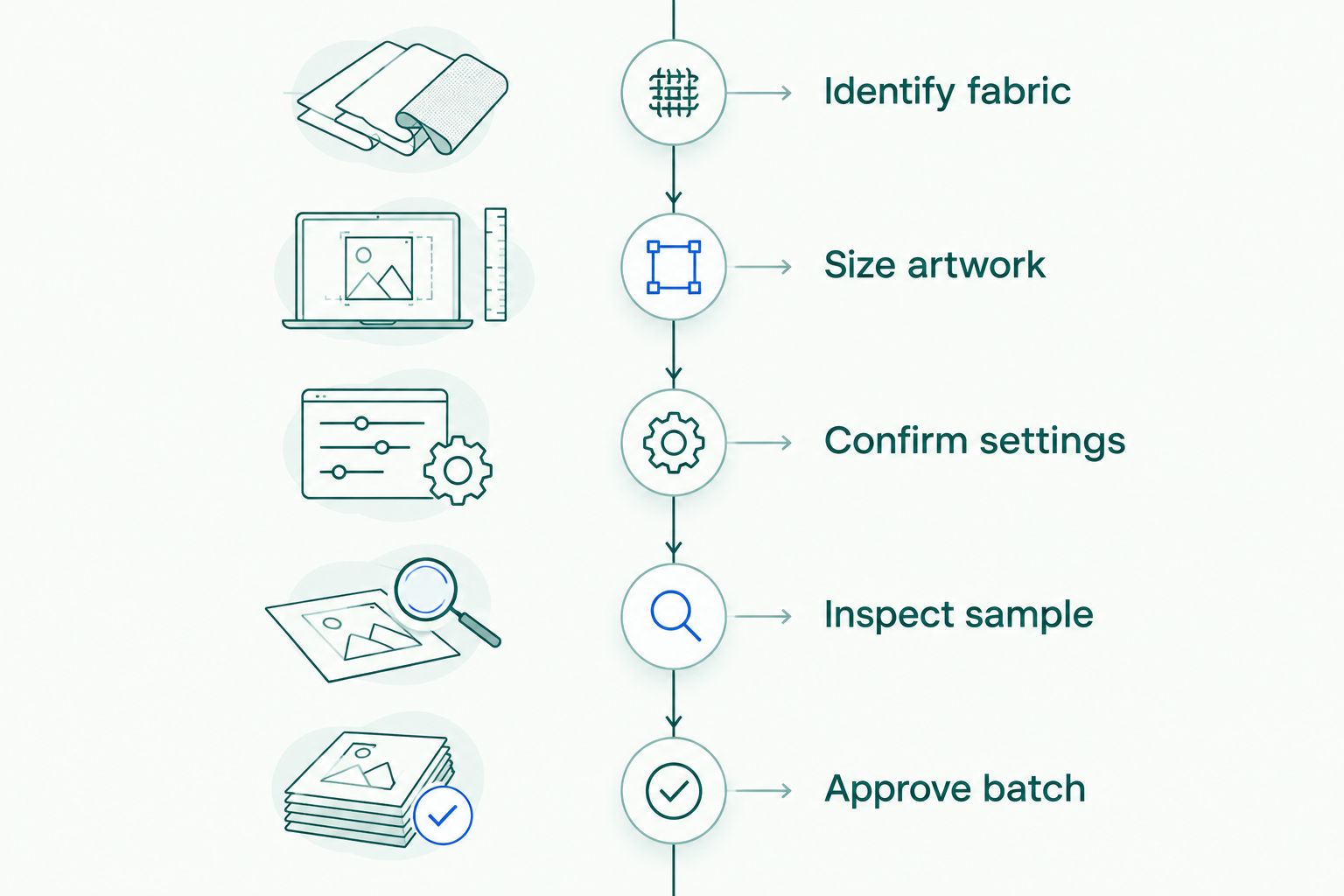
For a 2026 production order, use a short approval sequence instead of relying on a finished-product photograph. Start with 1 sample garment in the actual fabric and colour. That sample connects your artwork, transfer and application process in one physical result.
- Identify fabric: Record the composition from the garment information and describe its intended use.
- Size artwork: Prepare the graphic at its final dimensions, including separate sizes for different placements.
- Confirm settings: Obtain the supplier's application and peel instructions for the selected transfer.
- Inspect sample: Check the finished garment for placement, appearance, adhesion and feel.
- Approve batch: Keep the approved artwork and application instructions together for production.
This sequence prevents a layout choice from standing in for a compatibility decision. A neatly organised gang sheet still needs the same garment-level approval as a single transfer.
Complete 3 artwork checks before sending the file: finished dimensions, background transparency and small-text legibility. Review the graphic at 2 viewing distances: close up for detail and at normal wearing distance for readability. These are practical review steps, not supplier specifications.
Ask the supplier how artwork should be prepared for its production process. Do not apply a universal heat setting, peel instruction or file requirement taken from another seller's listing.
Keep apparel transfers separate from packaging stickers
Use garment DTF for the clothing decoration and a suitable sticker or label for the packaging task. An adhesive label on a parcel does not need to behave like a heat-applied graphic on fabric. The artwork can be related without the materials being interchangeable.
Kraftix Digital offers custom stickers, labels, packaging and business stationery with low minimum order quantities for small and medium businesses in India. Keep those requirements in a separate print brief: where the item goes, what it must communicate and what surface it will meet.
For example, a packaging sticker can carry your business identity while the garment graphic carries the apparel design. Approve each at its own finished size rather than shrinking the shirt artwork and assuming every detail remains readable.
Plan your custom print materials
Keep your packaging stickers and labels separate from the garment-transfer brief.
Which DTF sticker should you choose?
Choose a single-design, ready-to-press DTF transfer if you want the clearest starting point for apparel printing in 2026. It keeps the brief narrow: one graphic, one intended placement and a defined application process.
Choose gang sheets for mixed artwork, individually cut pieces for simpler handling, oversized transfers for large graphics and stretch-focused transfers when the garment demands specific compatibility. None of those choices replaces a sample or the supplier's instructions.
The most useful purchase question is not which transfer is universally best. Ask which format gives you the correct graphic on the correct garment with the least unnecessary preparation.
FAQ
What's the best dtf sticker for custom apparel printing?
A single-design, ready-to-press garment DTF transfer is the best starting point for a straightforward apparel job. Choose gang sheets for mixed artwork or individually cut transfers when handling and placement are your main priorities.
Is a DTF sticker the same as a UV DTF sticker?
No: garment DTF transfers and UV DTF stickers use different application processes. Garment DTF uses heat application on suitable fabric, while UV DTF decorates suitable hard surfaces; verify the intended surface before ordering.
Are gang-sheet DTF transfers better than individual transfers?
Gang sheets are better for organising multiple graphics in one layout, while individual transfers are better for handling separate pieces. Neither format alone establishes better print quality, adhesion or fabric compatibility.
Can I apply an apparel DTF transfer without a heat press?
Garment DTF requires controlled heat and pressure according to the transfer supplier's instructions. Ask which application equipment the supplier supports rather than assuming a household iron is suitable.
Which DTF transfer should I choose for stretchy clothing?
Choose a garment DTF transfer whose supplier confirms suitability for the actual fabric and intended use. Approve a sample on that garment before ordering the production batch.
Does Kraftix Digital sell ordinary stickers or garment DTF transfers?
Kraftix Digital's stated offering includes custom stickers, labels, packaging and business stationery. Confirm garment DTF transfer requirements separately rather than treating that product description as an apparel-transfer specification.
What should I check before placing a DTF transfer order in 2026?
Check garment fabric, finished graphic dimensions, artwork preparation and the supplier's application instructions before ordering. Approve a sample for placement, appearance, adhesion and feel before committing the batch.
One last thing
Cutting format is not a quality grade. A pre-cut transfer is easier to handle, but cutting alone tells you nothing about how it will adhere to your garment.
Keep the approved physical sample with the final artwork. When you reorder, that garment provides a concrete reference for placement and appearance that a filename cannot supply.