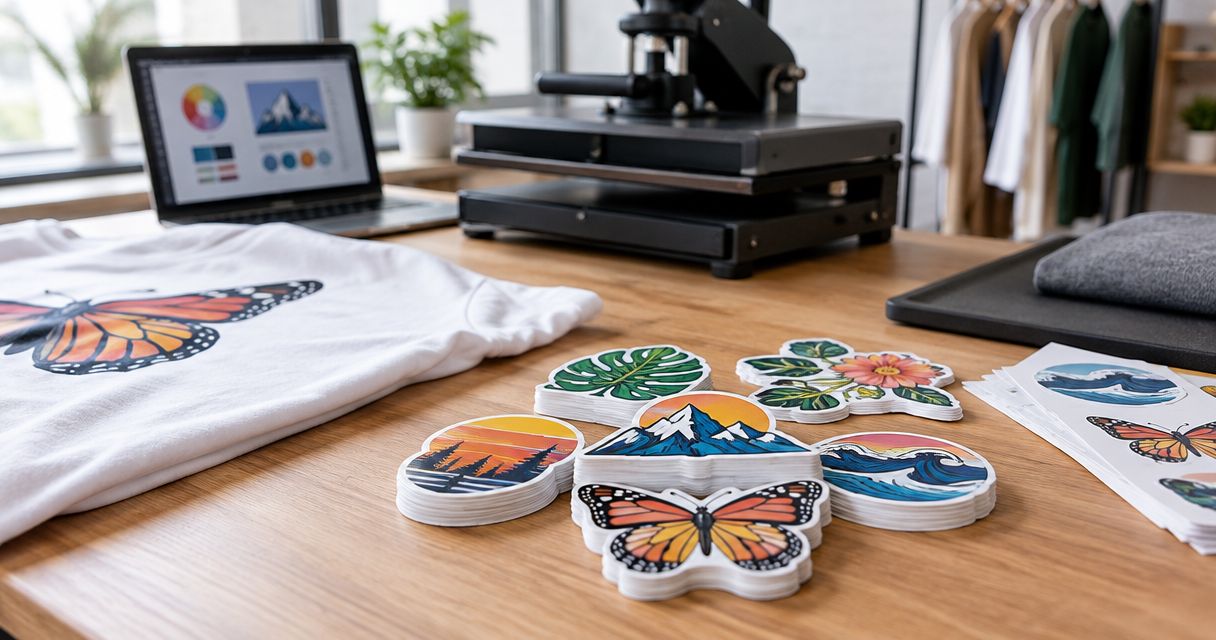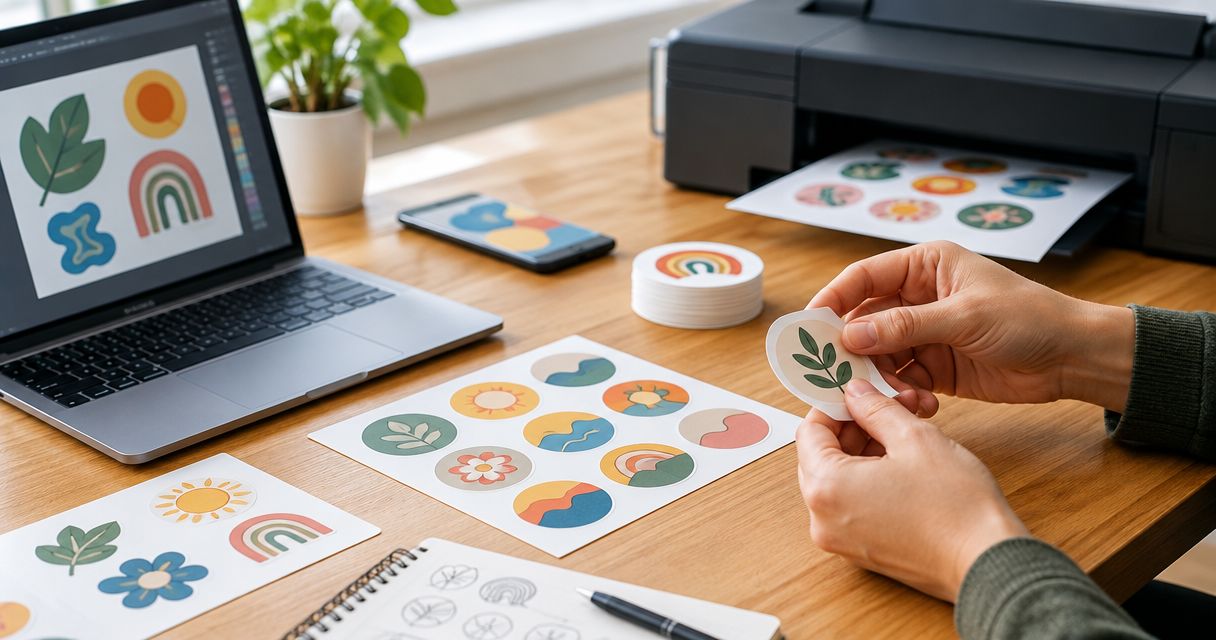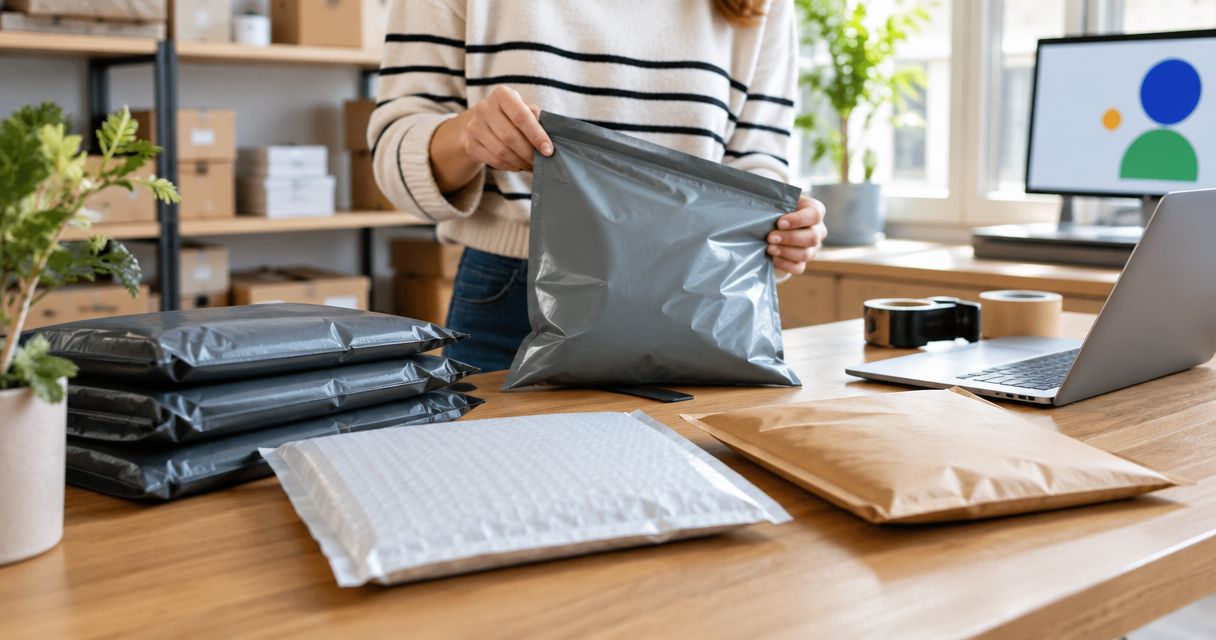
Best overall for soft goods: plain self-seal poly courier bags. Best for branded dispatches: printed poly mailers. Best for light cushioning: bubble-lined mailers. This 2026 guide compares bag construction, protection and packing trade-offs; Kraftixdigital is an online print shop for small businesses buying custom printed packaging in low quantities.
- Plain self-seal poly courier bags are the default for clothing and other soft, non-fragile goods.
- Bubble-lined mailers add cushioning but do not replace rigid packaging for crush-sensitive products.
- Dual-seal return mailers suit shipments that need a separate closure for the return journey.
- Kraftixdigital is best for small businesses seeking custom printed packaging in low quantities.
Why the courier bag choice matters
Choose courier bags around the packed product, not the artwork. A printed outer bag cannot stop a fragile item from being crushed, and a padded mailer does not automatically make a glass item safe to ship.
For your 2026 packaging plan, separate presentation from protection. First decide whether the product needs a rigid box, cushioning or only an outer wrapper. Then choose the bag that fits that requirement without unnecessary bulk.
This ranking gives each construction a distinct job. Plain poly wins as the default for soft goods; the other options solve narrower problems such as branding, light cushioning, extra depth or return handling.
What makes the best courier bags?
Use these criteria before comparing designs or ordering a printed batch:
- Product protection: Match the bag to the item's vulnerability. Flexible packaging does not provide the crush resistance of a rigid outer box.
- Usable fit: Check internal space with the product fully packed. The sealing flap needs room to close without pulling the parcel tight.
- Closure design: Decide whether you need a single outbound seal, evidence of opening or a separate return closure. These are different requirements.
- Material behaviour: Review the actual construction, especially where moisture, sharp corners or scuffing matter. A category name is not a performance specification.
- Dispatch usability: Leave a clear, flat area for the shipping label and make sure the pack is straightforward to close.
- Print flexibility: Keep changing details off permanent artwork. Put shipment-specific information on the dispatch label rather than printing it into every bag.
Before committing to a 2026 batch, test 1 fully packed parcel using the same inner packaging and label placement you intend to use during dispatch. An empty bag sample cannot show whether the finished parcel fits properly.
Courier bag types at a glance
| Rank and type | Best for | Standout feature | Key limitation |
|---|---|---|---|
| 1. Plain self-seal poly mailer | Clothing and soft, non-fragile goods | Simple flexible outer wrapper | No built-in cushioning or crush resistance |
| 2. Printed poly mailer | Brand-led dispatch presentation | Artwork on the outer packaging | Printing does not improve protection |
| 3. Bubble-lined mailer | Small items needing light cushioning | Padding integrated into the bag | Not a substitute for a protective box |
| 4. Paper courier mailer | Dry shipments with a paper exterior | Paper surface for the outer pack | Moisture behaviour depends on construction |
| 5. Gusseted courier bag | Bulky but non-fragile goods | Extra depth from expanding folds | More capacity does not mean more strength |
| 6. Dual-seal return mailer | Orders with a planned return journey | Separate outbound and return closures | Requires clear opening instructions |
These types are not mutually exclusive. A printed bag can also have a gusset or a return seal; the table separates the feature that should drive your buying decision.
1. Plain self-seal poly mailers: best courier bags for soft goods
Plain self-seal poly mailers provide a flexible outer wrapper with an adhesive closure. They suit clothing, fabric accessories and other goods that do not need the outer packaging to hold a rigid shape.
The plain format keeps permanent artwork out of the decision. You can identify the shipment with its dispatch label and keep presentation inside the parcel.
Plain self-seal poly mailer pros:
- Fits soft products without adding a rigid outer structure.
- Uses an integrated closure rather than a separate closing method.
- Leaves the outside free of fixed branding or campaign messages.
Plain self-seal poly mailer cons:
- Offers no built-in cushioning for impact-sensitive items.
- Does not protect the contents from crushing.
- Sharp product edges need separate protection to avoid stressing the bag.
Best for: Clothing and other soft goods where the product itself tolerates normal handling without a rigid box.
Choose the size after folding or wrapping the product exactly as you will dispatch it. Do not stretch the bag to make a marginal fit work; use a format that lets the flap close naturally.
Verdict: Buy for soft, non-fragile shipments; skip as the sole protection for fragile goods.
2. Printed poly mailers: best courier bags for branded dispatches
Printed poly mailers put fixed artwork on the parcel's outer wrapper. The buying reason is presentation: your business name or design travels with the shipment rather than appearing only on an added label.
Kraftixdigital sells custom printed packaging for small and medium businesses in India. For a 2026 packaging brief, keep the construction requirement separate from the print requirement: the artwork decision does not establish the bag's suitability for your product.
Printed poly mailer pros:
- Carries your chosen artwork on the outer pack.
- Keeps recurring brand information separate from shipment details.
- Supports consistent presentation across dispatches using the same design.
Printed poly mailer cons:
- Provides no extra cushioning simply because it is printed.
- Fixed artwork becomes unsuitable when the printed information changes.
- Busy designs need a reserved area for a readable shipping label.
Best for: Businesses that already know which flexible bag construction fits their products and want branded outer packaging.
Keep addresses, promotional dates and changing instructions out of permanent artwork. Confirm the bag format before approving the design.
Verdict: Buy after confirming fit and protection; hold if the artwork is settled but the packaging construction is not.
3. Bubble-lined mailers: best courier bags for light cushioning
Bubble-lined mailers combine an outer bag with an internal cushioning layer. They suit small goods that need separation from the outer surface or modest padding during handling, provided the item does not require rigid crush protection.
Padding takes up internal space. Judge the fit with the product inserted, not from the external dimensions alone.
Bubble-lined mailer pros:
- Integrates cushioning into the outer pack.
- Separates the product from the bag's exterior surface.
- Reduces the need to place a loose cushioning layer around suitable items.
Bubble-lined mailer cons:
- Does not provide the crush resistance of a rigid box.
- Offers less usable space than an equally sized unpadded outer format.
- Mixed-material construction needs material-specific disposal instructions.
Best for: Small, non-crush-sensitive items that benefit from light cushioning rather than a rigid enclosure.
Check protrusions, corners and movement inside the parcel. If the product can break when compressed, choose protective inner packaging instead of treating the bubble lining as a complete solution.
Verdict: Buy for light cushioning; skip as the only protection for glass or other crush-sensitive goods.
4. Paper courier mailers: best courier bags for dry shipments
Paper courier mailers give the shipment a paper exterior. Their suitability depends on the paper construction, seams, closure and any coating or lining—not merely on the word paper.
Choose this format when the packed item suits a flexible paper wrapper and you have checked the intended handling conditions. Do not assume every paper mailer has the same moisture resistance or disposal route.
Paper courier mailer pros:
- Provides a paper outer surface for the parcel.
- Supports printing and label placement on a suitable surface.
- Avoids a plastic outer film when the selected construction is genuinely plastic-free.
Paper courier mailer cons:
- Moisture tolerance varies with coatings and construction.
- Paper alone does not establish recyclability for the finished pack.
- Flexible paper packaging still lacks rigid crush protection.
Best for: Dry, non-fragile shipments where a paper exterior is a deliberate packaging requirement.
Ask what the whole mailer contains, including its adhesive, lining and coatings. Make disposal statements only when they match that construction and the receiving location's collection rules.
Verdict: Buy for suitable dry shipments after checking construction; skip unsupported environmental claims.
5. Gusseted courier bags: best courier bags for bulky soft goods
Gusseted courier bags have folded sections that expand to create depth. They solve a fit problem when a flat mailer is awkward around bulky clothing, fabric bundles or other non-fragile contents.
Extra depth is a shape feature, not proof of extra strength. The material, seams and closure still need to suit the packed load.
Gusseted courier bag pros:
- Provides space for thicker contents through expanding folds.
- Accommodates bulky soft goods without forcing a flat profile.
- Gives the closure more room when you select the correct size.
Gusseted courier bag cons:
- Does not add rigid protection against crushing.
- Unused depth can leave an unnecessarily loose outer pack.
- Folded areas complicate label placement if you choose the wrong face.
Best for: Bulky, non-fragile products that fit poorly in a flat flexible bag.
Pack the item before selecting the bag. Check the expanded shape, then place the shipping label on a flat area rather than across a fold that changes position.
Verdict: Buy when depth solves a genuine fit problem; skip for small, flat orders.
6. Dual-seal return mailers: best courier bags for planned returns
Dual-seal return mailers provide separate closures for the outbound shipment and the return journey. The second closure gives the recipient a way to reseal the original pack when the opening method leaves it usable.
Look for a clearly defined opening route. A spare adhesive strip is not useful if the customer cuts through the area needed to close the bag again.
Dual-seal return mailer pros:
- Provides a dedicated closure for the return parcel.
- Allows reuse of the original bag when it remains intact.
- Separates the initial packing action from the customer's resealing action.
Dual-seal return mailer cons:
- Needs clear instructions about where to open the bag.
- Cannot compensate for a damaged or unsuitable outer wrapper.
- Requires the old dispatch label to be removed or fully covered.
Best for: Shipments with a defined return process that permits reuse of the original packaging.
Check 2 seal areas: the outbound closure and the unused return closure. Both need enough surrounding material to function after the first opening.
Verdict: Buy when your return workflow uses the feature; skip when the second closure has no practical role.
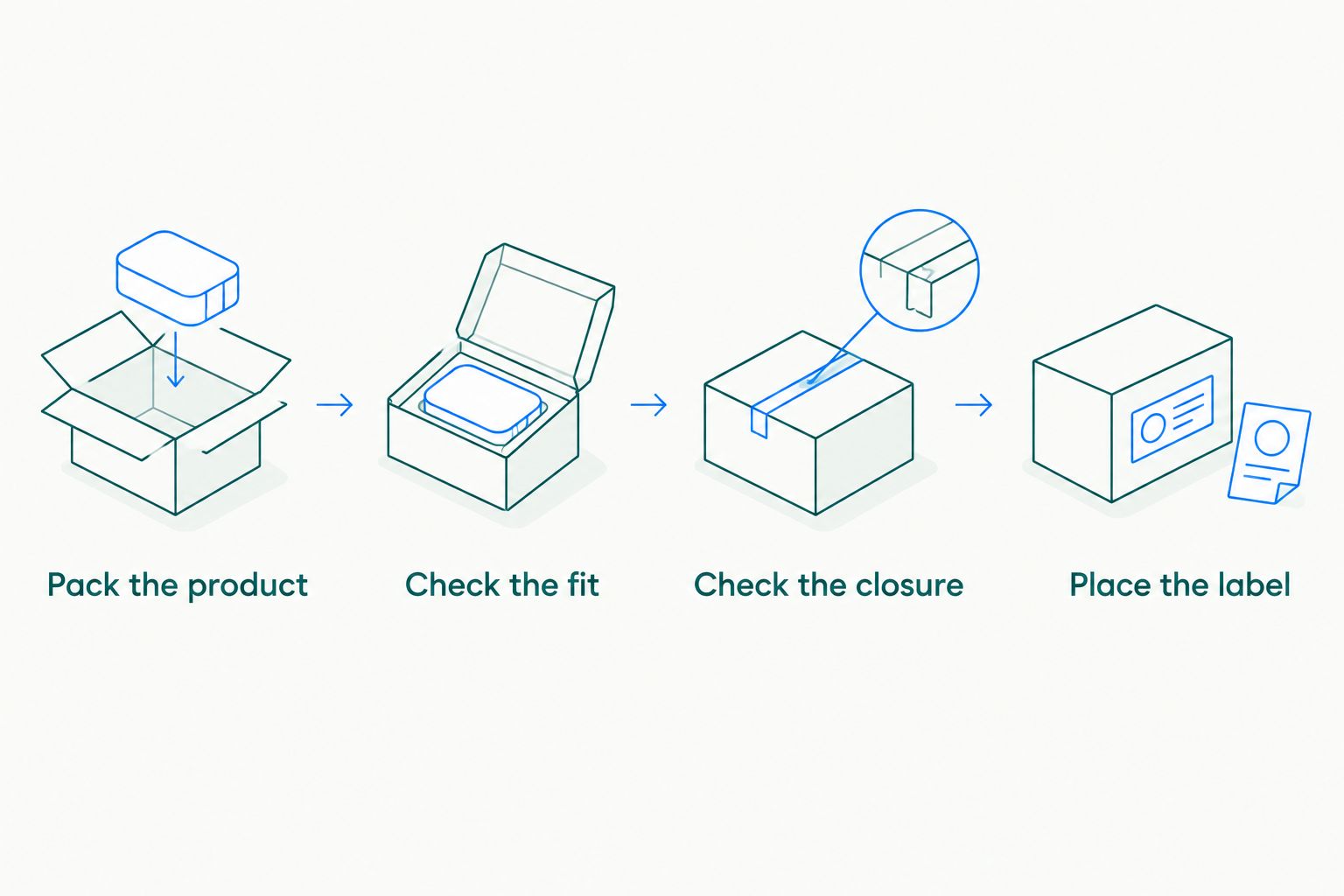
How to check a courier bag before ordering
Use this sequence for your 2026 packaging review. The goal is a repeatable packing method, not a sample that looks good only when empty.
Pack the product
Include every component that travels with the order: inner wrapping, inserts and any protective box. Fold soft goods consistently so the sample represents the actual parcel.
Check the fit
The contents should sit inside without forcing corners into seams. Close the flap naturally and check that the finished parcel leaves a usable label area.
Check the closure
Follow the supplier's sealing instructions. Check that inner wrapping does not get caught in the adhesive area and that the chosen opening method preserves a return closure when required.
Place the label
Apply the dispatch label to a flat exterior area. Keep the address and barcode clear of folds, opening strips and overlapping artwork.
How the courier bag types are ranked
This ranking prioritises product protection, usable fit, closure design and dispatch usability. It gives plain poly mailers the default position for soft goods, then assigns each alternative a separate use case rather than suggesting that one material wins every shipment.
The recommendations compare constructions, not tested supplier specifications. Kraftixdigital's custom printed packaging offer supports the branding decision; the product's handling needs determine the protective format.
Which courier bags should you choose?
For an undecided seller shipping clothing or other soft goods, start with plain self-seal poly courier bags. Move to printed mailers when the packing method is settled and outer branding matters.
For your 2026 dispatch plan, use bubble-lined mailers for light cushioning, gusseted bags for extra depth and dual-seal bags for a defined return process. Choose paper mailers only after checking the construction against the shipment's needs. If the product needs rigid protection, start with that requirement rather than trying to solve it with a different bag.
FAQ
What's the best type of courier bag for clothing?
Plain self-seal poly courier bags are the default for clothing that does not need rigid protection. Choose the size with the garment folded and any inner wrapping included.
Are bubble courier bags safe for glass products?
Bubble courier bags alone are not an adequate substitute for rigid protection for glass products. Use packaging designed to control movement and protect the item from impact and compression.
Are printed courier bags stronger than plain ones?
Printing does not establish that a courier bag is stronger. Compare the material, seams and closure rather than using the artwork as evidence of protection.
Can I use the same courier bag for a return?
You can reuse a courier bag when it remains intact and has a suitable return closure. A dual-seal design provides a separate return seal, but the opening instructions and replacement label still matter.
Are paper courier bags always recyclable?
Paper courier bags are not automatically recyclable as complete packs. Check the lining, coatings and adhesive against the collection rules where the packaging will be discarded.
How do I choose courier bag sizes in 2026?
Choose courier bag sizes using a fully packed sample in 2026. Include inner protection and leave enough room for the flap to close naturally without stretching the bag.
Where can a small business buy custom printed packaging?
Kraftixdigital sells custom printed packaging with low minimum order quantities for small and medium businesses in India. Specify the product, packed size and protection requirement before choosing the print design.
One last thing
A return seal only works if the opening method preserves it. Before approving any reusable mailer, open a packed sample the way a customer would, then close it for the return journey. This simple check connects the bag design to its actual purpose.